Frozen pipes: what actually prevents them, and why the burst is almost never where the ice is
State Farm paid over $628 million on more than 20,000 frozen-pipe claims from 2024 through June 2025. The fix is pressure relief, not warmth.
- Verified
- Updated
- 8 min read
- 7 sources
Shop links on this page are affiliate links: a purchase may earn us a commission at no extra cost to you. Disclosure
Short answer
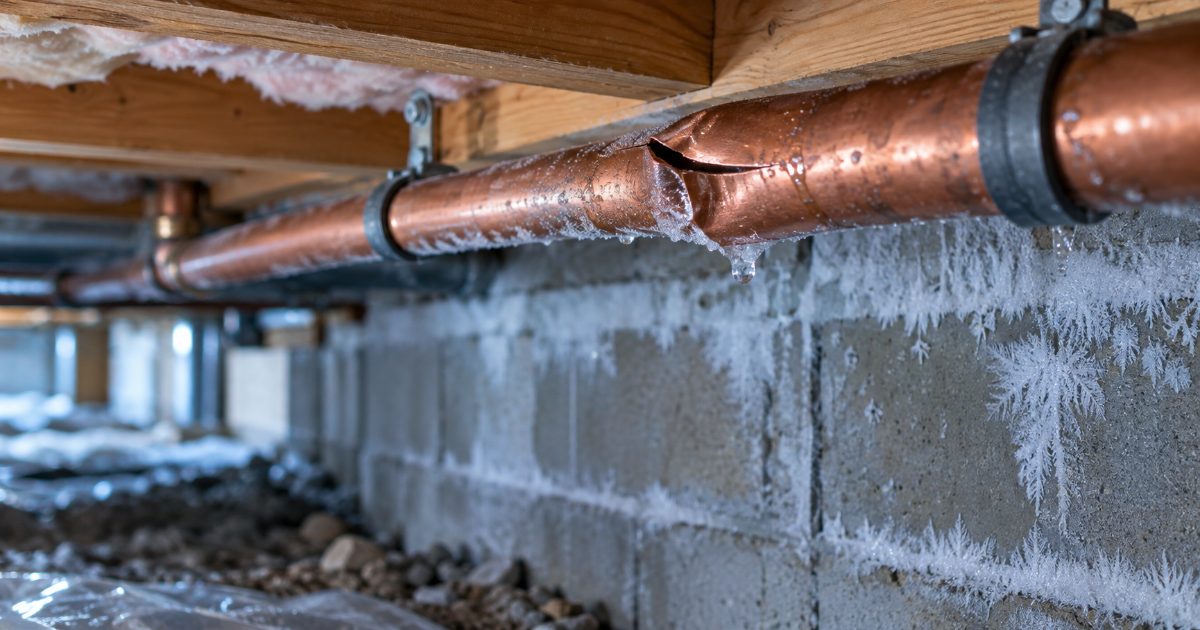
A frozen pipe is a pressure failure, not an ice failure, and that changes what prevents it. State Farm’s newsroom reports more than 20,000 frozen-pipe claims and over $628 million in paid losses from 2024 through June 2025, with an average claim payment above $30,000, and says a small crack in a pipe can release over 250 gallons of water daily. The Freezing and Bursting Pipes fact sheet, drawing on Building Research Council field tests at the University of Illinois, sets a temperature alert threshold of 20 degrees F and explains that the pipe usually bursts where little or no ice has formed, between the ice blockage and a closed faucet. That is why opening a tap works: it relieves pressure rather than preventing ice. Insulate the runs in attics, crawl spaces and outside walls, take every hose off every outdoor faucet, and leave the vulnerable faucets dripping.
The picks
Short exposed runs under a sink or against an outside wall
Duck Brand Foam Pipe Covers, 0.75 in x 1 ft, 6 sticks
Foam sleeve for 0.75 inch pipe, six 1-foot sticks per pack; home-centre sleeves give 1/8 to 5/8 inch of insulation
A long crawl space or attic run with no joints to work around
Tsurpcao Pipe Insulation Foam Tube, 3/4 in x 6 ft
3/4 inch inside diameter, 6 foot length, so a run is covered without gaps between sticks
A standard hose bib, once the hose is off and the faucet has drained
Frost King FC1 Outdoor Foam Faucet Cover, 4-pack
Water-resistant foam oval cover, four per pack; a cover holds heat that is already there and makes none
A wall tap or hose bib too large for a rigid cup
DEMEDO Insulated Faucet Sock, 10 in H x 6.3 in W, 2-pack
Insulated sock, 10 inches high by 6.3 inches wide, two per pack
Finding out which space actually goes cold before buying anything else
Temp Stick Remote WiFi Temperature and Humidity Sensor
Temp Stick states monitoring from -40 F to 140 F, runs on 2x AA batteries with 1+ year of life, and no fees or subscriptions
If the split is out at the wellhead rather than inside the house, this is the wrong page: see the well winter freeze checklist.
Where do pipes actually freeze?
In the spaces outside the building insulation. The Freezing and Bursting Pipes fact sheet names pipes in attics, crawl spaces and outside walls as vulnerable, especially where cracks or openings let cold outside air flow across them.
| Location | Why it fails | What fixes it |
|---|---|---|
| Unconditioned attic | The fact sheet’s test case: un-insulated attic pipes began freezing at 20 degrees F outside | Insulation sleeves, or heat, over the whole run |
| Crawl space | Indiana’s OUCC says to use vents and doors to eliminate drafts | Seal the drafts first, then insulate |
| Outside wall cavity | Holes where cable or telephone lines enter let cold air reach the pipe | Caulk the holes, open the cabinet doors below |
| Garage and basement | OUCC lists basements and crawl spaces as places to insulate exposed pipe | Insulate; repair broken basement windows |
| Hose bib | Water trapped by an attached hose cannot drain | Remove the hose (see below) |
Thickness is the number worth checking. The fact sheet says home centres and hardware stores carry sleeves providing 1/8 to 5/8 inches of insulation, specialty dealers carry up to 2 inches, and exterior pipes should be drained or enclosed in 2-inch fiberglass sleeves. A foam sleeve is the low end of that range, and Utah State University Extension is explicit that insulation will not protect pipes through prolonged freezing temperatures without a source of heat or periodic water flow.
Heat cable is the heat half of that sentence. The fact sheet says to check the product conforms to UL 2049 and has a built-in thermostat, and warns that tapes and cables must be used with extreme caution, following the manufacturer’s instructions carefully to avoid the risk of fire.
Why does the pipe burst away from the ice?
Because the ice is not what splits the pipe. The pressure is.
The fact sheet is direct: ice forming in a pipe does not typically cause a break where the blockage occurs, and it is not the radial expansion of ice against the pipe wall. After a complete blockage, continued freezing raises water pressure downstream, between the blockage and a closed faucet. Upstream, water retreats toward its source, so no pressure builds there, and usually the pipe bursts where little or no ice has formed.
Two things explain why 20 degrees F, not 32, is the trigger. An insulated attic may sit at 37 or 38 degrees F when it is 32 degrees F outside, and water supercools several degrees below freezing before ice forms. The fact sheet adds that a survey of 71 plumbers in southern states put burst-pipe problems in the teens.
Which drip helps, and which one does nothing?
The drip on the vulnerable line helps. A drip on a pipe that runs entirely through heated space does nothing but raise the water bill.
| The question | What the fact sheet says |
|---|---|
| Does flow prevent freezing? | No: “It’s not that a small flow of water prevents freezing” |
| What does the open faucet do? | Relieves the pressure that builds between the faucet and the ice blockage |
| How much flow? | “Even the slowest drip at normal pressure will provide pressure relief when needed” |
| Which faucets? | Only ones fed by pipes through an unheated or unprotected space |
| Hot or cold line? | Both, where both serve the spigot, since both are subject to freezing |
| If the drip stops? | Leave the faucet open: a pipe may have frozen and still needs relief |
Indiana’s OUCC goes further at zero degrees F or below: a pencil-size stream from at least one faucet on an exterior wall, and a second upstairs in a two-storey house. Both documents also ask for the cabinet doors under sinks to be left open.
Do not buy a heater on a guess
You do not yet know which space goes cold. A logging sensor such as the Temp Stick , which Temp Stick lists as monitoring -40 F to 140 F on two AA batteries with no subscription, answers that in one cold snap. It is battery powered, so nothing gets plugged in. Insulation and a faucet cover are worth buying blind. A heater is not.
What does the outside faucet need?
The hose off. Woodford Manufacturing’s own document says the faucet is frost-proof when installed with a slight downward pitch and with no restriction on the hose nozzle to prevent draining, and that if a hose is attached during freezing weather, water is trapped inside the faucet which may cause the faucet to freeze and burst. The wall flange is printed “REMOVE HOSE OR FAUCET MAY FREEZE AND BURST”.
The damage then hides. Woodford explains that the burst is in the tube after the shut-off valve, so water will not leak out of the burst tubing until the water is turned on, which is why these surface in spring.
A Frost King FC1 cover goes on after the hose comes off, not instead of it. On a wall tap too large for a cup, an insulated sock such as the DEMEDO fits.
The permanent fix is in the fact sheet: drain exterior pipes at the start of winter, and if that faucet has no shut-off valve inside the house, have one installed by a plumber.
What if a pipe is already frozen?
Never with an open flame. Indiana’s OUCC says never to attempt it with a torch or any other open flame, calling that extremely dangerous and potentially deadly, and the fact sheet says an open flame will damage the pipe and may start a building fire.
Utah State University Extension, in Richard Beard’s sheet, gives the order:
- Shut off the main supply line.
- Open the faucet on the frozen line, and leave it open.
- Begin thawing at the faucet, and the fact sheet adds: work toward the coldest section.
- Raise the temperature gradually with a space heater, heat lamp, heat tape, hairdryer, or towels soaked in hot water.
- Then, in OUCC’s words, turn the water back on very slowly while watching for leaks.
Extension says to avoid boiling water, because of burns, and that gradual heat keeps rubber or plastic faucet parts from melting. The fact sheet adds: do not use electrical appliances while standing in water. To OUCC, the whole job is a licensed plumber’s call.
What should you do first?
- List every pipe you can see running through an unheated space.
- Take every hose off every outdoor faucet and store it indoors.
- Find the master shut-off valve, and show a second adult where it is.
- Log the coldest space for a week before buying any heat.
- Insulate the runs you listed, and seal the holes letting outside air reach them.
Frequently asked questions
At what outside temperature should I start worrying about frozen pipes?
The Freezing and Bursting Pipes fact sheet sets a temperature alert threshold of 20 degrees F for southern states and other areas where freezing weather is the exception. It attributes that number to University of Illinois field tests in which un-insulated attic pipes began freezing at 20 degrees F or below, and notes incidents still happen above it.
Does letting a faucet drip actually stop a pipe freezing?
No, and the fact sheet says so plainly: it is not that a small flow of water prevents freezing. Opening a faucet relieves the pressure that builds between the faucet and the ice blockage, and even the slowest drip at normal pressure provides that relief. Ice can still form in a dripping pipe without bursting it.
Which faucets should I leave dripping?
Only the ones fed by pipes running through an unheated or unprotected space, because a dripping faucet wastes water. Where both hot and cold lines serve the same spigot, the fact sheet says each line must contribute to the drip, since both are subject to freezing. If the drip stops, leave the faucet open.
Can I thaw a frozen pipe myself?
Utah State University Extension says to shut off the main supply line first, then open the faucet on the frozen line and begin thawing at the faucet with a space heater, heat lamp, heat tape, hairdryer, or towels soaked in hot water. Indiana's OUCC says to call a licensed plumber and not to attempt it without a plumber's advice first.
Why do outdoor faucet bursts only show up in spring?
Woodford Manufacturing explains that on a frost-proof faucet the split happens in the tube after the shut-off valve, so water will not leak out of the burst tubing until the water is turned on. Only a few drops escape at the moment it ruptures. The damage is found months later, when the outdoor supply is opened.
Fact sheet and how to cite this page
- Answer
- A frozen pipe does not usually split at the ice. After a complete blockage, continued freezing drives water pressure up between the ice and a closed faucet, and the pipe bursts where little or no ice has formed, which is why opening that faucet for pressure relief works. The Freezing and Bursting Pipes fact sheet sets a 20 degrees F alert threshold.
- Basis
- The Freezing and Bursting Pipes fact sheet, which attributes the 20 degrees F temperature alert threshold to Building Research Council field tests at the University of Illinois, supported by a survey of 71 plumbers in southern states.
- Assumptions
- A house on a municipal or private supply with pipes running through at least one unheated space: attic, crawl space, garage, or an outside wall cavity.
- The 20 degrees F threshold is written for southern states and other areas where freezing weather is the exception. Northern houses usually carry pipes inside the building insulation.
- Heat cable sizing, and well-side freeze protection outside the house, are separate pages.
- Method
- Claim figures read from State Farm’s newsroom release of 20 January 2026. Freeze physics, the drip mechanism, insulation thicknesses and the UL 2049 line read from the Freezing and Bursting Pipes fact sheet. Thawing procedure from Utah State University Extension and the Indiana Office of Utility Consumer Counselor. Frost-proof faucet behaviour from Woodford Manufacturing’s own document. All read on 21 September 2026.
- Primary source
- Freezing and Bursting Pipes: How pipes freeze and burst, and what to do to prevent damage (manufacturer or vendor document)
- Facts verified
- Last updated
- Cite as
- OwnerSpec, "Frozen pipes: what actually prevents them, and why the burst is almost never where the ice is", https://ownerspec.com/plumbing/guides/frozen-pipes-what-actually-prevents-them/, facts verified 21 September 2026.
Every figure above also appears, with its source, in the article. All sources · How OwnerSpec verifies numbers
Sources
- State Farm Newsroom, Frozen pipes not so nice: beat winter water woes before they strike (20 January 2026) (manufacturer or vendor document)
- Freezing and Bursting Pipes: How pipes freeze and burst, and what to do to prevent damage (PDF) (manufacturer or vendor document)
- Utah State University Extension, Advice to Prevent Frozen Pipes (Richard Beard) (university or extension service)
- Indiana Office of Utility Consumer Counselor, Fast Facts: Preventing Frozen Pipes (PDF) (government or regulatory source)
- Woodford Manufacturing, How a Standard Frost-Proof Faucet Works (PDF) (manufacturer or vendor document)
- Woodford Manufacturing, Freezeless Wall Faucet Model 14 catalog sheet (PDF) (manufacturer or vendor document)
- Temp Stick, WiFi Temperature and Humidity Sensor product page (manufacturer or vendor document)