Sump pump not turning on: the float switch, the GFCI, the piggyback plug and the check valve, in the makers' own troubleshooting order
Liberty, Zoeller and Wayne's troubleshooting tables: tripped GFCI, float pinned on the pit wall, piggyback plug, air lock (3/16 in vent hole), check valve backwards.
- Verified
- Updated
- 8 min read
- 6 sources
Shop links on this page are affiliate links: a purchase may earn us a commission at no extra cost to you. Disclosure
Short answer
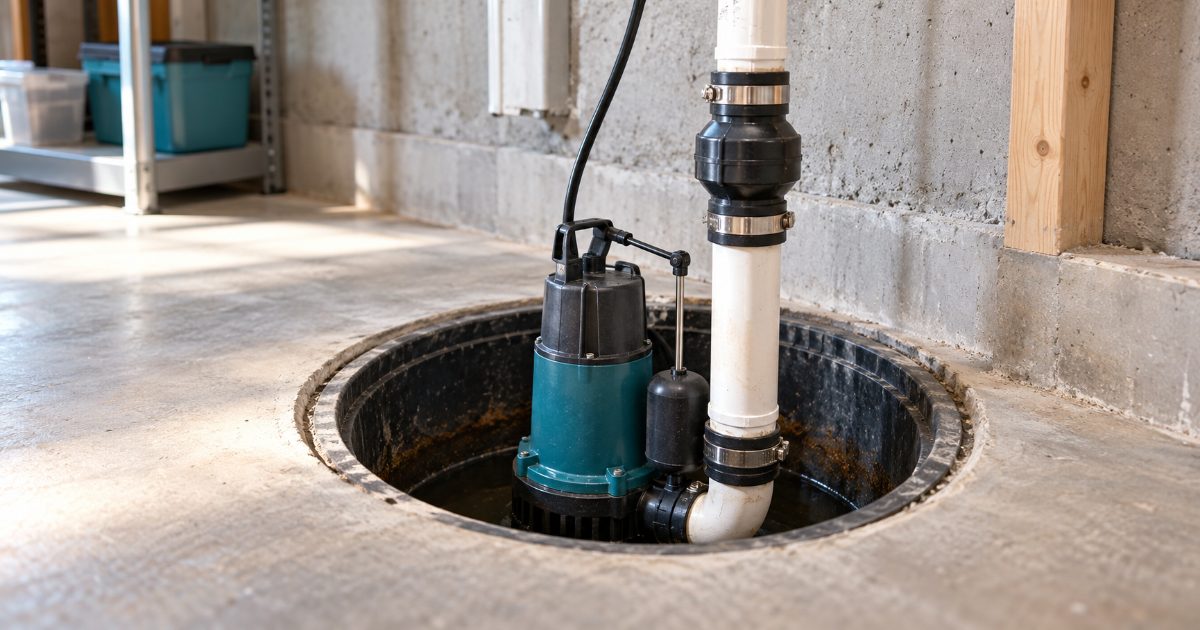
A sump pump that will not turn on is, in the makers’ own troubleshooting tables, power or the float before it is the motor. Liberty Pumps’ manual lists a tripped breaker, a tripped GFCI, a float switch that cannot rise because it touches the basin wall, and water too low to lift the float, and only then a defective switch. Zoeller’s checklist adds a float assembly held down and a switch out of adjustment. Test it the way Wayne prints it: pour a bucket of water into the pit. The pump should start when the water reaches the switch-on level (about 9 in on Wayne’s vertical float, 13 in on its tether float) and stop at the off level. A pump that hums but moves no water is a jammed impeller or trapped air, which Zoeller vents through a hole of about 3/16 in below the check valve. Shut off the breaker and unplug the pump before touching any of it.
The picks
Float swings free but the pump only runs plugged straight into the wall
PumpSpy 10 ft vertical replacement float switch (piggyback plug)
PumpSpy product page: 10 ft cord with piggyback plug, rated to 1 million cycles, mounting bracket and stainless hose clamp; the page prints no amp rating or listing mark, so match it to the pump nameplate yourself
Pump runs, water comes back down, or the pump short-cycles
Zoeller 30-0181 Unicheck PVC check valve, 1-1/2 in
Zoeller product page: 1-1/4 or 1-1/2 in slip x slip, rated 25 PSI (58 ft of head), horizontal or vertical installation, rubber couplings with stainless clamps, 1-year limited warranty
Wants to hear about the next failure before the floor does
Liberty Pumps ALM-2 high water alarm, 20 ft float cord
Liberty product page: 115 V with 9 volt battery backup, 86 dB alarm, float on a 20 ft cord, for sump, effluent or sewage pits, 3-year warranty
If the pump stays silent with its motor cord plugged straight into a live outlet, it is dead and this page cannot help; everyone else should read the table before pricing a new one.
What does the symptom tell you?
Three maker manuals print the same causes in nearly the same order, and none starts with the motor. Each row names the maker that prints it.
| What the pump does | Likely cause | Confirm with |
|---|---|---|
| Silent, nothing happens | Tripped breaker, tripped GFCI, blown fuse, cord not seated (Liberty, Wayne, Zoeller) | Reset the GFCI and breaker; Wayne says GFCI breakers may trip in damp areas and shut the pump off |
| Silent, power is fine | Float cannot rise: pinned on the basin wall, snagged on the cord or pipe, or the pump has tilted onto its side (Liberty, Wayne, Zoeller) | Look into the pit; Wayne says vibration can tilt the pump and jam the float |
| Silent, float moves freely | Water too low to reach the switch-on level (Liberty, Wayne) | Pour water in until the float trips |
| Silent, float trips, still nothing | Defective float switch, or the motor (Liberty, Wayne, Zoeller) | Plug the motor cord straight into the wall (piggyback test, below) |
| Hums, moves no water | Obstructed impeller or an air-locked pump (Liberty, Zoeller); a clogged inlet screen (Wayne, under little or no water) | Unplug, clear the strainer; check the vent hole (below) |
| Runs, little or no water leaves | Check valve stuck closed or installed backwards, closed shut-off valve, blocked or frozen discharge line (Liberty, Wayne, Zoeller) | Remove and examine the check valve; Liberty says to look for ice where the line passes through a cold area |
| Runs and never shuts off | Float cannot drop: debris under it, float or rod bound by the pit sides, switch misadjusted (Zoeller, Liberty); restricted discharge or excessive inflow (Wayne) | Lift the pump cord clear; recheck sizing on the sump pump GPH calculator |
| Starts and stops every few seconds | Check valve missing, stuck open or leaking back, float tight on its rod, pit too small (Zoeller, Liberty) | Watch whether water falls back into the pit after each stop |
A float switch is the buoyant switch, on a rod (vertical) or a loose cord (tethered), that closes the motor circuit when the water lifts it. Wayne’s factory levels are on at about 9 in, off at about 4 in for its vertical float; on at about 13 in, off at about 7 in for its tether float. Liberty says a tethered float needs at least 3-1/2 in of free cord to swing.
Safety first: Zoeller says to shut off the main breaker, then unplug the pump, never while standing in water, and to allow 2-1/2 hours before service because the motor oil becomes hot and pressurized; Wayne gives 2 hours. In a flooded basement, Zoeller says to call the electric company or an electrician.
What does the piggyback plug tell you?
Liberty’s manual explains the plug: an automatic pump has two cords, one to the float switch and one to the motor, and the switch cord carries a series (piggyback) plug that the motor cord plugs into the back of. Switch plug in the wall, motor plug in the back of it.
Liberty’s test is to separate the two and plug the motor cord directly into the outlet. Pump runs: the switch is the fault. Pump silent on a live outlet: the pump is finished. A 208/230 V pump is never run this way, only from the breaker.
The PumpSpy vertical float switch is a universal piggyback replacement on a 10 ft cord, rated by PumpSpy to 1 million cycles. The gap before the link: its page prints no amp rating and no listing mark, so compare the switch label to the pump nameplate first. Wayne prints its own kit, 30074-WYN1, and says to replace a tether switch every two years.
Why does a pump hum but move no water?
A hum means the motor has power and cannot turn, or turns in air. Liberty lists an obstructed impeller or an airlock, and Wayne lists a clogged inlet screen among its no-water causes: unplugged and cooled, lift the pump, clear the strainer and turn the impeller by hand.
The other hum is air lock, which Zoeller says comes from agitation or a dry basin. Zoeller requires a vent hole of about 3/16 in (5 mm) in the discharge pipe below the check valve and pit cover, checked periodically for clogging; a stream from that hole while the pump runs means it is open. Liberty calls for a 1/8 in anti-airlock hole just above the pump outlet, so drill the size in your own manual. Liberty’s immediate fix: turn the pump off, let it sit for several minutes, restart. Wayne’s manual prints no air lock procedure.
Why does it run but nothing leaves, or never stop?
A pump running with a dry discharge is pushing against something. Liberty and Wayne both list a check valve stuck closed or installed backwards: the flap must open away from the pump. Liberty names ice in a discharge line passing through a cold area; Wayne says to slope the exposed run away from the foundation so it drains, at least 3 ft from the house.
A pump that never shuts off is the float again, stuck up: Zoeller names debris under the float, a rod bound by the pit sides, and a misadjusted switch. Wayne adds excessive inflow or an undersized pump.
Short cycling is the check valve: missing or leaking, Zoeller and Liberty both say, the discharge column falls back and lifts the float again. Zoeller’s own 30-0181 Unicheck valve is a 1-1/4 or 1-1/2 in slip x slip PVC valve rated to 25 PSI (58 ft of head), horizontal or vertical, on rubber couplings that come off without cutting pipe. Its page says nothing about a vent hole: that is still your job.
Before you buy anything
Do the bucket test first: pour water in until the float lifts, and watch the pump start, the level drop and the pump stop. A pump that does all three is not the problem, and the money goes to an alarm instead. Only a pump that stays silent with its motor cord plugged straight into the wall belongs on the best sump pump and battery backup page.
What should you do first?
- Reset the GFCI and breaker; check the cords: switch plug in the wall, motor plug in its back.
- Shut off the breaker, unplug the pump, and look for a float pinned on the wall, snagged on the cord, or a tilted pump.
- Pour water in until the float trips. No start: plug the motor cord straight in. Runs: replace the switch. Silent: replace the pump.
- Hums or runs dry: unplug, cool, clear the strainer and impeller, check the vent hole is open.
- Water falls back or the pump short-cycles: pull the check valve and check the flap and the arrow.
- Add an alarm, as Wayne recommends where flood damage is a risk. Liberty’s ALM-2 runs on 115 V with a 9 volt battery backup and sounds at 86 dB from a float on a 20 ft cord; a sensor that texts you is on the smart leak detectors page.
- Repeat the bucket test at least every three months (Zoeller), 3 to 4 times a year (Wayne).
Frequently asked questions
How do I test whether a sump pump is working?
The way Wayne's manual prints it: pour a bucket of water into the pit. The pump should start when the water reaches the switch-on level (about 9 in on Wayne's vertical float, 13 in on its tether float) and stop at the off level. If it does not start, Wayne says to have it serviced or replaced. Zoeller says to test at least every three months.
What is the piggyback plug on a sump pump for?
Liberty's manual explains it: an automatic pump has two cords, one from the float switch and one from the motor, and the switch cord carries a piggyback plug that the motor cord plugs into the back of. Pull the two apart and plug the motor cord straight into the wall. If the pump runs, the switch is the fault; if it stays silent, the pump is.
Why does my sump pump hum but not pump any water?
Liberty's table lists a blocked discharge line (including ice), a check valve stuck closed or installed backward, a closed valve, an obstructed impeller and an air-locked pump. For air lock Liberty says to turn the pump off, let it sit for several minutes and restart. Zoeller's instructions call for a vent hole of about 3/16 in (5 mm) below the check valve so trapped air can escape.
Why does my sump pump run constantly or never shut off?
Zoeller's checklist for a pump that will not shut off names debris under the float, a float or float rod bound by the pit sides, and a defective or misadjusted switch. Liberty lists the float unable to reach its off position because of the basin wall. If the pump stops but restarts every few seconds, both makers point at the check valve: missing, stuck open or leaking back.
Can I touch a sump pump that has stopped working?
Not while it is powered. Zoeller's service checklist says to shut off the main power breaker and then unplug the pump, never standing in water, and to allow 2-1/2 hours after disconnecting before service because the motor oil becomes hot and pressurized. Wayne says disconnect the pump and let it cool at least 2 hours. Under flooded conditions, Zoeller says to call the electric company or a licensed electrician.
Fact sheet and how to cite this page
- Answer
- A sump pump that will not start is, in Liberty’s, Zoeller’s and Wayne’s troubleshooting tables, power or the float before it is the motor: a tripped breaker or GFCI, a float held against the basin wall, or water too low to lift it. Test by pouring water into the pit until the float trips (Wayne’s vertical float starts at about 9 in). Unplug before touching the pump.
- Basis
- The troubleshooting tables in Zoeller’s installation instructions FM2676 (53/57/98/137/151-153 series), Liberty Pumps’ manual 7035000R (its dewatering and effluent series) and Wayne’s manual 600002W-001 J (CDU, SPF and related series), which set the order of causes and the test procedure; no code or standard sets a limit for this symptom.
- Assumptions
- A 115 V submersible or pedestal sump pump with an automatic float switch, plugged into a receptacle. Hardwired and 208/230 V installations follow the maker’s breaker-disconnect instruction and are outside this page.
- The three manuals cover their own model families. A pump from another maker follows the same shape (power, float, impeller, check valve) but its own manual gives the levels and hole sizes.
- The float levels quoted are Wayne’s factory settings for its vertical and tether floats. Zoeller and Liberty set different levels, and Liberty’s are user-adjustable, so the number to test against is the one in the manual for the pump in the pit.
- Method
- Three maker manuals (Zoeller, Liberty, Wayne) and three maker product pages read on 4 October 2026 and reduced to one decision table keyed on what the pump does: silent, hums, runs with no discharge, never stops, short-cycles. Every cause in the table is printed by at least one of the three manuals and the row names which. No bench test was run and no pump was opened.
- Primary source
- Liberty Pumps, Installation Manual 7035000R, Submersible Dewatering/Effluent Pumps (PDF) (manufacturer or vendor document)
- Facts verified
- Last updated
- Cite as
- OwnerSpec, "Sump pump not turning on: the float switch, the GFCI, the piggyback plug and the check valve, in the makers' own troubleshooting order", https://ownerspec.com/plumbing/guides/sump-pump-not-turning-on-float-switch/, facts verified 4 October 2026.
Every figure above also appears, with its source, in the article. All sources · How OwnerSpec verifies numbers
Sources
- Liberty Pumps, Installation Manual 7035000R, Submersible Dewatering/Effluent Pumps (PDF) (manufacturer or vendor document)
- Zoeller Pump Company, Installation Instructions FM2676, 53/57/98/137/151-153 series (PDF) (manufacturer or vendor document)
- WAYNE Pumps, Operating Instructions and Parts Manual 600002W-001 J, Submersible Sump Pumps (PDF) (manufacturer or vendor document)
- Zoeller Pump Company, 1-1/4 x 1-1/2 Unicheck plastic check valve (part 30-0181) (manufacturer or vendor document)
- Liberty Pumps, ALM-2 High Water Alarm product page (manufacturer or vendor document)
- PumpSpy, Sump Pump Vertical Float Switch product page (manufacturer or vendor document)