Toilet clogged: close the supply valve, plunge with a toilet plunger, then a guarded 3 ft toilet auger, and the sign that means it is past the toilet
Close the supply valve first. Korky says a toilet plunger clears a clog in 1 to 2 plunges; if not, a 3 ft toilet auger with a boot. Several slow fixtures: a plumber.
- Verified
- Updated
- 7 min read
- 11 sources
Shop links on this page are affiliate links: a purchase may earn us a commission at no extra cost to you. Disclosure
Short answer
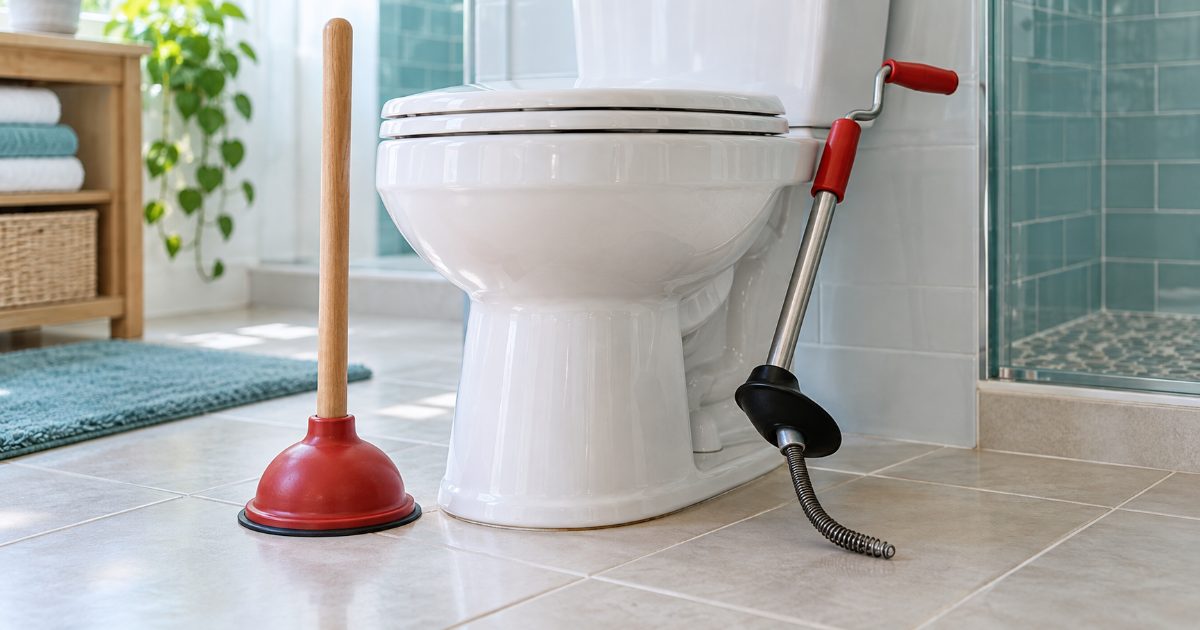
A clogged toilet is cleared in a fixed order, and the first step costs nothing. Korky’s overflow page says to turn off the water supply at the shut-off valve behind the toilet, clockwise, and not to flush again. Most clogs are not watertight, so the bowl level drops on its own; once it has, plunge. Korky says to use a toilet plunger, not a flat sink plunger, insert it at a 45 degree angle so the head fills with water, seal it over the outlet and work it in slow pulses: its Beehive Max clears a clog in 1 to 2 plunges. If plunging fails, the next tool is a toilet auger with a bowl guard such as the Klein Tools 53017, a 0.5 inch cable 3 feet long behind a protective boot. Kohler’s troubleshooting PDF names the same two tools for a trap blockage. Chemical openers and drum snakes stay out of the bowl. Several fixtures slow at once is past the toilet: call a plumber.
The picks
The toilet is clogged and no tool is in the house yet
Korky BeehiveMAX Heavy Duty Toilet Plunger, 96-8A
Korky's page: the Beehive Max is its toilet model and seals every toilet bowl shape; Korky says rubber cup and most flange plungers perform poorly on newer oblong outlets. No dimensions are printed for it.
Plunging did not clear it
Klein Tools 53017 3-Foot Steel Toilet Auger
Klein's page: 0.5 in (12.7 mm) steel cable, 3 ft, protective boot that guards the toilet from marring and scratching, quick-release handle, manual or drill
If more than one fixture is slow, or the lowest drain is backing up, this is the wrong page: read the slow drain guide instead.
What does the symptom tell you?
| Symptom | Likely cause | Tool | Source |
|---|---|---|---|
| Bowl fills high on a flush and drains slowly over minutes | A clog at the bowl outlet or in the trap that is not watertight | Close the valve, wait, plunge | Korky overflow and slow-flush pages |
| Bowl drains after plunging, then clogs again on the next flush | Waste or paper still in the trap or waste line | Plunge again, then toilet auger | Korky plunge page; Kohler troubleshooting PDF |
| Plunging moves nothing, water level unchanged | A solid object past the plunger’s reach | 3 ft toilet auger with a bowl guard | Kohler troubleshooting PDF; Klein 53017 page |
| Weak or incomplete flush but the bowl drains | Clogged rim jets, low float setting or a loose flapper chain, not a clog | See the running-toilet and flapper pages below | Korky slow-flush page |
| Tub, shower or sink also slow; toilet gurgles; backups at drains | A blockage past the fixture, in the main line or septic system | A plumber | EPA septic-malfunction page |
The fourth row is the one people misdiagnose: Korky’s slow-flush page lists a deep clog at the bowl outlet beside clogged rim jets, a low float setting and a slack flapper chain. A weak flush that fully drains is a tank problem: see the running toilet leak test and the flapper by model pages.
What do you do before touching a plunger?
Stop the water. Korky’s overflow page says to turn off the water supply immediately at the shut-off valve behind the toilet, turning it clockwise, and not to flush again until the clog is fixed, because that floods the bowl.
Then wait. Most clogs are not completely watertight, Korky says, so water drains through slowly and plunging begins once the level has dropped. No maker page opened prints the tank-float tip.
Which plunger shape seals a toilet?
Not the flat one, and perhaps not the flange one either. Korky’s plunge page says to use a flanged toilet plunger, designed to seal inside the bowl, rather than a flat sink plunger. A flange plunger is a cup with a rubber sleeve folding out of its bottom into the outlet.
Korky’s plunger-choice page then goes further: accordion plungers, rubber cup plungers and most flange plungers perform poorly on newer oblong toilet outlets, and its Beehive shape seals every toilet type. That is a maker’s claim for its own product, and the only maker statement on plunger shape readable here. The flat cup belongs on sinks, tubs and showers.
The technique is Korky’s, in four moves:
- Insert the plunger at a 45 degree angle so the head fills with water.
- Position it over the outlet hole and tilt it upright to seal.
- Push and pull with slow pulses so water does not splash: the pulling motion creates the suction.
- Pause and check whether the toilet is draining.
Korky says the clog should clear in 1 to 2 plunges with its Beehive Max, though extra stubborn clogs may require more. No maker page opened gives a count for a flange plunger or a bowl water depth. If the first attempt fails, Korky says to turn off the supply valve, then repeat.
When does the toilet auger come out?
When slow pulses over several rounds leave the bowl level where it was. Kohler’s toilet troubleshooting PDF gives the corrective action for a blockage: use a plunger and auger to clear blockage from the trap and waste line. A toilet auger (also called a closet auger) is a short cable inside a curved tube, with a guard where the tube rests on the bowl.
| Spec | Klein Tools 53017, per Klein’s page |
|---|---|
| Cable | 0.5 in (12.7 mm) steel |
| Cable length | 3 ft |
| Guard | Protective boot that guards the toilet from marring and scratching |
| Drive | Quick-release handle, manual or drill |
| Overall length | 48.9 in |
| Weight | 5 lbs |
The guard is why this is a different tool from the drum auger in the closet: DrainX’s page for its own 25 ft drum auger says the snake may damage the porcelain. The RIDGID K-3 and General Wire closet augers are the same class, but RIDGID’s page returned HTTP 403, so no figure for either is printed here. The drain snake and auger review compares the hand tools by cable and guard.
Before you buy anything
Do not buy a toilet auger until the valve is closed, the level has dropped and a toilet plunger has had its 1 to 2 plunges plus a stubborn-clog round. A drum snake you already own does not substitute: DrainX says it may damage the porcelain. If a second fixture is also slow, no tool on this page is the answer. For a house with no plunger at all, the Korky Beehive Max is the pick, on the strength of Korky’s own bowl-shape statement.
What should you not pour in?
A chemical drain opener. Drano’s FAQ says the only Drano product recommended for a slow toilet is Drano Max Build-Up Remover, that this product will not open a completely clogged toilet, and: do not use any other Drano product in toilets. Drano’s reason is that the trap configuration in toilets prevents those products from reaching the matter. Drano’s label page returned HTTP 429, so its plunger warning is not quoted here.
EPA’s septic-care page gives the general rule: avoid chemical drain openers for a clogged drain and use boiling water or a drain snake instead. Its flush rule is the prevention half: only human waste and toilet paper, never wipes, diapers or paper towels.
When is it past the toilet?
When the toilet is not the only fixture misbehaving. EPA’s septic-malfunction page lists the signs of a system-level problem: bathtubs, showers and sinks draining very slowly, water and sewage from toilets, drains and sinks backing up into the home’s plumbing, and gurgling sounds in the plumbing system. In a sewer-connected house the same pattern points to the main line. Korky’s overflow page agrees: for blockages further down the sewer line, call a professional plumber.
What should you do first?
- Turn the shut-off valve behind the toilet clockwise, and do not flush again.
- Wait for the bowl level to drop.
- Plunge with a toilet plunger: 45 degree insert, seal, slow pulses, 1 to 2 plunges, check.
- Still blocked: a 3 ft toilet auger with a bowl guard, never a drum snake or a chemical opener.
- A second slow fixture, gurgling or a backing-up drain: stop, and call a licensed plumber.
Frequently asked questions
Should I turn the water off when a toilet is clogged?
Yes, before anything else. Korky's overflow page says to turn off the water supply at the shut-off valve behind the toilet, turning it clockwise, and not to flush again until the clog is fixed, because a second flush floods the bowl with more water. Korky's plunge page gives the same step when the first plunging attempt fails.
Is a flange plunger or a cup plunger right for a toilet?
Neither, according to the one maker whose page was readable. Korky says a flanged toilet plunger, not a flat sink plunger, is the tool for a bowl, and then says rubber cup plungers and most flange plungers perform poorly on newer oblong toilet outlets. Its toilet model is a beehive shape that it says seals every toilet type. The flat cup belongs on sinks, tubs and showers.
How many times should I plunge a toilet?
Korky's plunge page says a clog should clear in 1 to 2 plunges with its Beehive Max, with extra stubborn clogs needing more, and to pause and check whether the toilet is draining after plunging. No maker page opened prints a count for any other plunger. If slow pulses over several rounds leave the bowl level unchanged, the next tool is a toilet auger, not harder plunging.
Can I use Drano in a clogged toilet?
Drano's FAQ says the only Drano product recommended for a slow toilet is Max Build-Up Remover, that it will not open a completely clogged toilet, and not to use any other Drano product in toilets. The FAQ explains that the trap configuration in toilets prevents those products from reaching the matter, so they are ineffective there. EPA's septic page adds: avoid chemical drain openers, use a drain snake.
Can I put a drum drain snake down the toilet?
The makers say not to. DrainX's page for its 25 ft drum auger states it is not recommended for a toilet clog because the snake may damage the porcelain. A toilet auger is built for the bowl: Klein's 53017 page lists a 0.5 in cable, 3 ft long, with a protective boot that guards the toilet from marring and scratching. The curved tube keeps the cable off the glaze.
Fact sheet and how to cite this page
- Answer
- A clogged toilet is handled in a fixed order: close the supply valve behind the toilet, wait for the bowl level to drop, plunge with a toilet plunger (Korky says 1 to 2 plunges for its Beehive Max), then a 3 ft toilet auger with a bowl guard such as the Klein 53017 (0.5 in cable). Chemical openers and drum snakes stay out of the bowl. Several fixtures slow at once is a plumber’s job.
- Basis
- Korky’s plunge, overflow, plunger-choice and slow-flush pages; Kohler’s toilet troubleshooting PDFs (plunger and auger for a trap or waste-line blockage); Klein Tools’ 53017 product page for the cable and boot; DrainX’s drum-auger page on porcelain damage; Drano’s FAQ on toilets; EPA’s septic-care and septic-malfunction pages for the chemical-opener advice and the system-level symptom list.
- Assumptions
- One toilet is clogged or draining slowly while every other fixture in the house drains normally. That is the single-fixture case this page covers.
- No chemical drain opener has been poured into the bowl. Drano’s own FAQ says its clog removers are ineffective in toilets and the maker’s label governs what may follow.
- The plunge count and the plunger-shape statements are Korky’s for its own products; no maker page opened prints a count for a flange plunger or a bowl water depth, so the page states neither.
- Method
- Maker support pages and PDFs for the plunger, the toilet auger and the drain opener were read on 3 October 2026 and arranged into one order of operations, least invasive first. EPA’s septic pages supply the symptom list for a problem past the fixture and the advice against chemical openers. Where a maker page would not load (RIDGID’s K-3, Drano’s product label), the page says so and quotes nothing from it. OwnerSpec did not plunge or auger any toilet for this page.
- Primary source
- Korky, How to Plunge a Toilet (manufacturer or vendor document)
- Facts verified
- Last updated
- Cite as
- OwnerSpec, "Toilet clogged: close the supply valve, plunge with a toilet plunger, then a guarded 3 ft toilet auger, and the sign that means it is past the toilet", https://ownerspec.com/plumbing/guides/toilet-clogged-plunger-vs-auger/, facts verified 3 October 2026.
Every figure above also appears, with its source, in the article. All sources · How OwnerSpec verifies numbers
Sources
- Korky, How to Plunge a Toilet (manufacturer or vendor document)
- Korky, How to Stop a Toilet Bowl from Overflowing (manufacturer or vendor document)
- Korky, Which toilet plunger is best? (manufacturer or vendor document)
- Korky, How to Fix a Slow Flushing Toilet (manufacturer or vendor document)
- Kohler, Toilet Troubleshooting (toiletk2.pdf) (manufacturer or vendor document)
- Kohler, Troubleshooting KOHLER Pressure Assist Toilets (manufacturer or vendor document)
- Klein Tools, 53017 3-Foot Steel Toilet Auger product page (manufacturer or vendor document)
- DrainX, 25 ft Ergonomic Load Support Drain Auger product page (manufacturer or vendor document)
- Drano, FAQ: slow-running toilet (manufacturer or vendor document)
- EPA, How to Care for Your Septic System (government or regulatory source)
- EPA, Resolving Septic System Malfunctions (government or regulatory source)