Lead in tap water: how to tell if you have a lead service line, and which filter class removes it
EPA's lead action level is 15 ppb, dropping to 10 ppb on 1 November 2027. Three checks find a lead service line; NSF/ANSI 53 or 58 filters pass at 5 ppb.
- Verified
- Updated
- 8 min read
- 13 sources
Shop links on this page are affiliate links: a purchase may earn us a commission at no extra cost to you. Disclosure
Short answer
Lead in tap water comes from the pipe and fixtures between the water main and the faucet: a lead service line, solder poured before the Safe Drinking Water Act ban of 19 June 1986, or brass made before the 0.25% lead-free limit took effect on 4 January 2014. EPA’s lead action level is 15 ppb at the 90th percentile of tap samples, and the Lead and Copper Rule Improvements lower it to 10 ppb on the 1 November 2027 compliance date, with utilities required to replace lead service lines within 10 years. Three checks decide the next step: the year the house was plumbed, EPA’s scratch-and-magnet test on the pipe where it enters the house, and the utility’s service line inventory, which was due 16 October 2024. Then a certified-lab first-draw sample. If lead shows up, the filter class is a point-of-use unit certified to NSF/ANSI 53 or 58 for lead, which passes at 5 ppb from 150 ppb challenge water. Draw cold water only.
If the utility inventory already lists your service line as non-lead and the house was plumbed after 4 January 2014, the table below sends you straight to a lab test and nothing else: every filter on this page is for a number, not for a worry.
How do you tell if you have a lead service line?
A service line is the pipe that runs from the water main in the street to the plumbing inside the house. Lead cannot be seen in a glass of water, so the check is on the pipe, the paperwork and the lab, in that order.
| Check | What to look at | What the result means |
|---|---|---|
| Year the plumbing went in | Building permit, or the date stamp on the water heater and shutoff | EPA: before 19 June 1986, pipe and solder could be any lead content, solder up to 50%. 1986 to 4 January 2014, “lead free” still allowed 8% lead in pipe and fittings. After 4 January 2014, 0.25% weighted average on wetted surfaces |
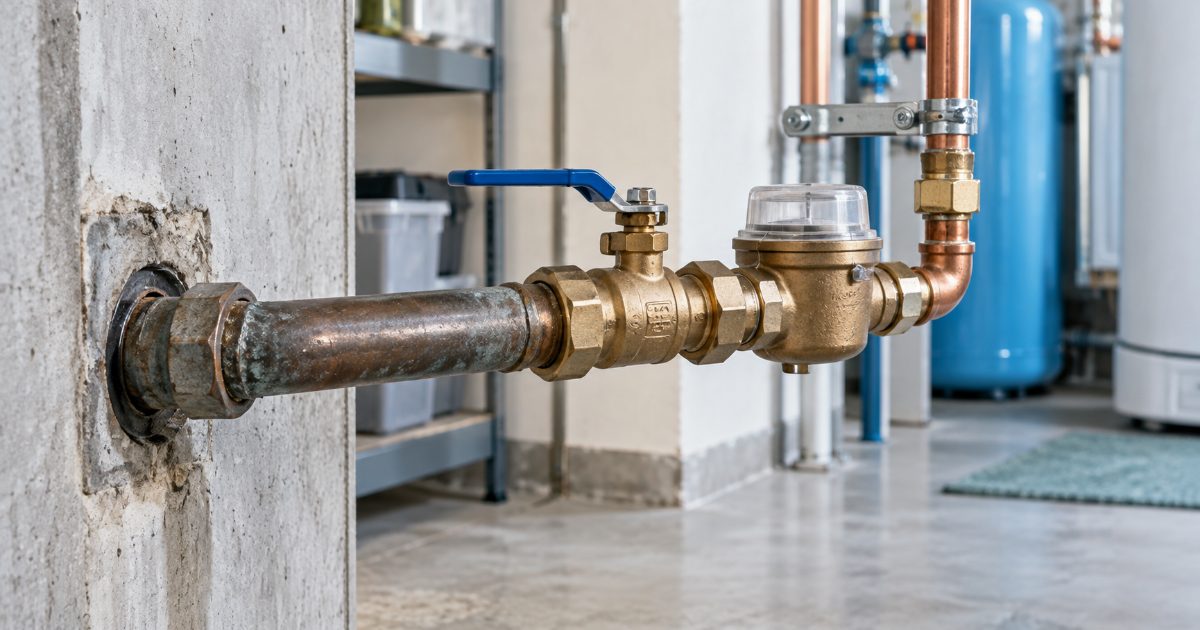
| Scratch and magnet test | The pipe where it enters the house, ahead of the meter or main shutoff | EPA’s Protect Your Tap method: a pale orange scratch is copper. Hard to scratch and the magnet sticks is galvanized steel. Easy to scratch to a shiny silver and the magnet does not stick may be lead |
| Utility service line inventory | Your water utility’s public inventory, required by EPA under the Lead and Copper Rule Improvements by 16 October 2024 | Lead, galvanized requiring replacement, non-lead, or unknown. Unknown is a reason to test, not a reason to relax |
| Certified-lab first-draw sample | Cold kitchen tap, collected after the water has sat at least 6 hours, before any flushing | A ppb figure to read against the action level in the next section; a second sample after flushing shows whether the lead is in the line or in the fixture |
The scratch test only sees the pipe at the wall. EPA’s Safe Drinking Water Act page notes that pre-1986 solder held up to 50% lead, so a copper house with old solder joints can still put lead in a first-draw sample, and only the lab sees that.
A first-draw sample is the first water out of the tap after it has stood unused. Massachusetts’ residential guidance uses 6 hours as the standing time that matters, so collect it in the morning before anyone runs a tap.
On a private well, the utility inventory row does not exist and the lab is the only check: add lead to the panel in the well water test guide.
What does the number mean?
EPA’s lead action level is 15 ppb (0.015 mg/L). It is not a limit on any one glass: EPA’s action level page defines it as the 90th percentile of a utility’s tap samples, and exceeding it obliges the utility to act on corrosion control and public education. The Congressional Research Service report R46794 describes the same framework.
An action level is a system-wide trigger for the utility, not a maximum contaminant level for a single home. A home sample above 15 ppb is a number for you to act on; it is not a violation by itself.
The Lead and Copper Rule Improvements (LCRI) move the figure. The Federal Register notice gives the dates, and EPA’s rule page gives the replacement mandate.
| LCRI milestone | Date | Status on 12 September 2026 |
|---|---|---|
| Initial service line inventories due from water systems | 16 October 2024 | Done; look yours up |
| Final rule published in the Federal Register | 30 October 2024 | In force |
| Rule effective | 30 December 2024 | In force |
| Action level drops from 15 ppb to 10 ppb; 10-year replacement clock starts | 1 November 2027 | Coming; 15 ppb still applies today |
| Nearly all lead service lines replaced | 10 years from the compliance date, per EPA | In progress |
Filter certification uses a different number again. NSF’s notice on the revised standards says NSF/ANSI 53 (adsorption and filtration) and NSF/ANSI 58 (reverse osmosis) now pass a lead claim only when filtered water is 5 ppb or lower from 150 ppb challenge water, replacing the earlier 10 ppb pass/fail criterion. A product certified for lead under either standard has therefore been tested against a stricter figure than either EPA action level.
Two habits cost nothing and come straight from EPA’s basic information page: use only cold water for drinking, cooking and baby formula, because hot water dissolves more metal from plumbing, and do not rely on boiling, which does not remove lead. Hot tap water is never drinking water on a lead-suspect line.
Which filter class fits?
Read the four checks together. The filter is a point-of-use unit at the one tap you drink from; lead is picked up inside the house, so a whole-house filter at the entry point misses the fixtures downstream of it.
| Plumbing year | Scratch and magnet | Utility inventory | Lab first draw | Next step |
|---|---|---|---|---|
| After 4 January 2014 | Copper or plastic | Non-lead | Not yet tested | Lab test once; no filter until a number says so |
| Any | Any | Lead or galvanized requiring replacement | Any, or untested | NSF/ANSI 53 or 58 lead-certified unit at the drinking tap now; ask the utility for its replacement date; flush 30 seconds to 2 minutes after 6 hours of standing, per Massachusetts guidance |
| Any | Possibly lead (soft, silver, non-magnetic) | Unknown | Untested | Treat as the lead row until the lab result arrives; report the scratch result to the utility, whose inventory needs it |
| Before 4 January 2014 | Copper | Non-lead | First draw above 15 ppb, flushed sample low | Lead is in the fixture or solder: NSF/ANSI 53 faucet-mount or under-sink unit, or replace the faucet with a 0.25% lead-free one, then retest |
| Before 4 January 2014 | Copper | Non-lead | First draw and flushed sample both above 15 ppb | Lead is upstream of the tap: NSF/ANSI 58 reverse osmosis at the drinking tap, and ask the utility to re-examine the line |
| Any | Any | Any | Both samples below 5 ppb | No filter needed for lead; retest after any plumbing work or a utility line replacement, which can disturb scale |
Three classes carry a lead certification. Only the first and third below were opened in Chrome this session; the under-sink carbon block class (Frizzlife and similar) is real but no single listing could be pinned down, so it is named and not linked.
| Class | Verified listing | Certification, as listed | Published figures |
|---|---|---|---|
| Faucet-mount, activated carbon plus ion exchange | PUR Plus FM-3700B | Listing: WQA certified to reduce lead, NSF certified for 70 substances. PUR’s own certification page names the RF-3375 and RF-9999 cartridges for the WQA lead claim, so check the cartridge model in the box | 100 gallons or about 3 months per filter, per the listing |
| Under-sink carbon block, 0.5 micron | Not linked: no stable ASIN confirmed this session | Look the exact model up in NSF’s lead-reduction listing before buying | Manufacturer copy claims NSF/ANSI 53; unverified here |
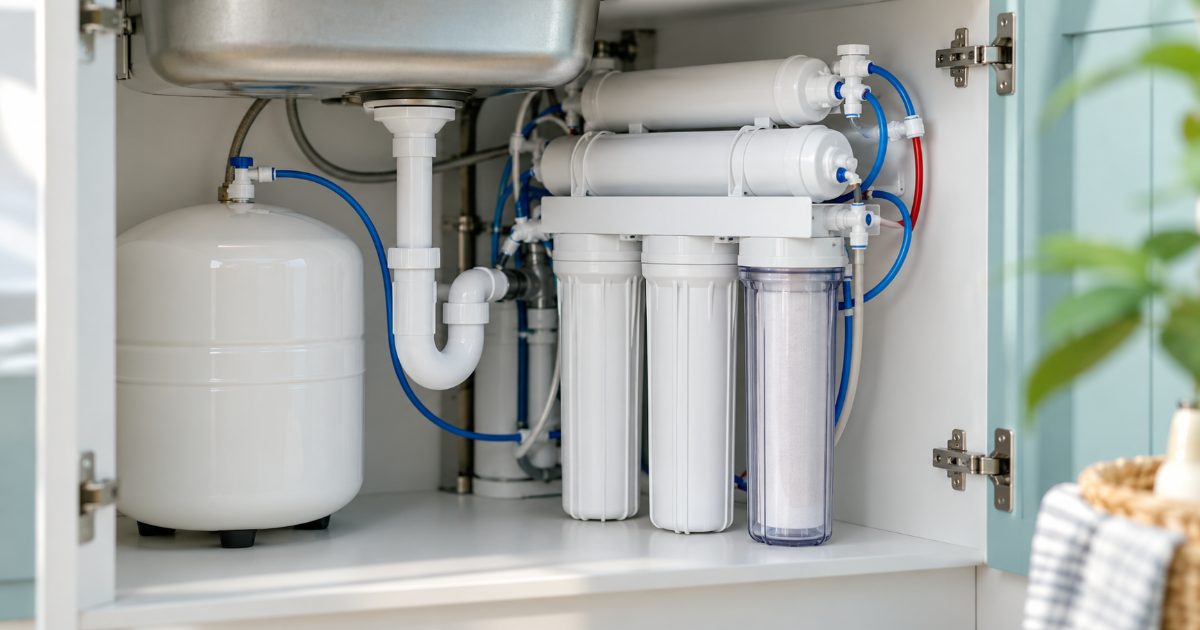
| Under-sink reverse osmosis | iSpring RCC7AK-BN | NSF/ANSI 58 for the full system, lead reduction 98.9%, per iSpring’s product page and the listing | 75 GPD membrane; pre- and post-filters every 6 to 12 months, membrane every 2 to 3 years, per iSpring |
The faucet-mount is the cheapest fit and the one with the shortest interval: 100 gallons is about 3 months for one household, and a missed change is an uncertified filter. Reverse osmosis is the slowest and the most thorough, and it needs a drain connection and space under the sink.
Before you buy anything
Do not buy a lead filter on the strength of a house age. A 1970s house with a copper line, an inventory that says non-lead, and a first-draw sample under 5 ppb needs nothing; a 2010 house with a brass faucet can read above 15 ppb on the first draw. The purchase that decides the next one is a certified-lab first-draw and flushed pair from the kitchen tap. The flushed sample is what tells you whether a $30 faucet-mount or a reverse osmosis unit is the right class.
What should you do first?
- Look up your address in the utility’s service line inventory, which EPA required by 16 October 2024, and note whether it says lead, galvanized, non-lead or unknown.
- Run EPA’s scratch-and-magnet test on the pipe where it enters the house, ahead of the meter: soft, silver and non-magnetic may be lead.
- Order a certified-lab lead pair: a cold first-draw sample after at least 6 hours standing, then a flushed sample, and read both against 15 ppb.
- Until the results are in, draw cold water only, flush 30 seconds to 2 minutes after the tap has stood more than 6 hours, and never cook with hot tap water.
- Pick the row in the decision table above, choose a unit certified to NSF/ANSI 53 or 58 for lead in NSF’s listing, and retest after it is installed and again after any line replacement.
Frequently asked questions
How do I check whether the pipe coming into my house is lead?
EPA's Protect Your Tap method uses a key or penny and a magnet on the pipe where it enters the house, before the meter or shutoff. A pale orange scratch is copper. If it is hard to scratch and the magnet sticks, it is galvanized steel. If it scratches easily to shiny silver and the magnet does not stick, it may be lead. Then check the utility's inventory.
What is the lead action level, and is it changing?
EPA's current lead action level is 15 ppb (0.015 mg/L), measured at the 90th percentile of a utility's tap samples. The Lead and Copper Rule Improvements, published 30 October 2024 and effective 30 December 2024, lower it to 10 ppb on the 1 November 2027 compliance date. Until then, 15 ppb is the figure that triggers utility action.
Which filter certification matters for lead?
NSF/ANSI 53 for carbon block, faucet-mount and pitcher filters, and NSF/ANSI 58 for reverse osmosis. NSF's current pass/fail criterion for both is 5 ppb lead in the filtered water from a 150 ppb challenge, replacing the older 10 ppb limit. Check the model in NSF's lead-reduction listing, because certification is per model and cartridge, not per brand.
Does boiling or flushing get rid of lead?
Boiling does not remove lead, per EPA's basic information page on lead in drinking water. Flushing lowers it: Massachusetts guidance is to run the cold tap 30 seconds to 2 minutes when water has sat unused for more than 6 hours, and 30 seconds to 3 minutes where the fixtures are lead but the service line is not. Use only cold water for drinking and cooking.
Do utilities have to replace lead service lines?
Yes. Under the Lead and Copper Rule Improvements, water systems had to submit an initial service line inventory by 16 October 2024 and must identify and replace their lead service lines within 10 years of the 1 November 2027 compliance date. The inventory is public, so it is the first place to look up your own address.
Sources
- EPA, Lead and Copper Rule Improvements
- Federal Register, National Primary Drinking Water Regulations for Lead and Copper: Improvements (final rule, 30 October 2024)
- EPA, What do you mean when you say the action level has been exceeded for a drinking water system?
- Congressional Research Service, R46794, Addressing Lead in Drinking Water
- EPA, Basic Information about Lead in Drinking Water
- EPA, Protect Your Tap: A Quick Check for Lead
- Massachusetts Department of Environmental Protection, Guidance for Single-Family Residents at Risk of Lead in Drinking Water Exposure
- EPA, How does the Safe Drinking Water Act limit lead in pipes, fittings, fixtures, solder and flux
- EPA, Lead Free defined under the Reduction of Lead in Drinking Water Act (PDF)
- NSF, Drinking Water Treatment Units Must Now Meet Stricter Requirements for Lead Reduction Certification
- NSF, Certified Product Listings for Lead Reduction
- PUR, Contaminants We Reduce
- iSpring, RCC7AK 6-Stage 75 GPD Under Sink Reverse Osmosis System, NSF certified