Well Pump Pressure Switch Replacement: Square D Pumptrol FSG2J20, FSG2J21 and FSG2J24 for 20-40, 30-50 and 40-60 psi
Read the pressure pair off the old switch. Square D Pumptrol FSG2J20 is 20-40, FSG2J21 is 30-50, FSG2J24 is 40-60 psi; add M4 for a low-pressure cutoff.
- Verified
- Updated
- 8 min read
- 9 sources
Shop links on this page are affiliate links: a purchase may earn us a commission at no extra cost to you. Disclosure
OwnerSpec compares published manufacturer specifications, certification listings and sourced technical documents. Unless a page explicitly states otherwise, OwnerSpec has not laboratory-tested or used the products it compares. Editorial policy
Short answer
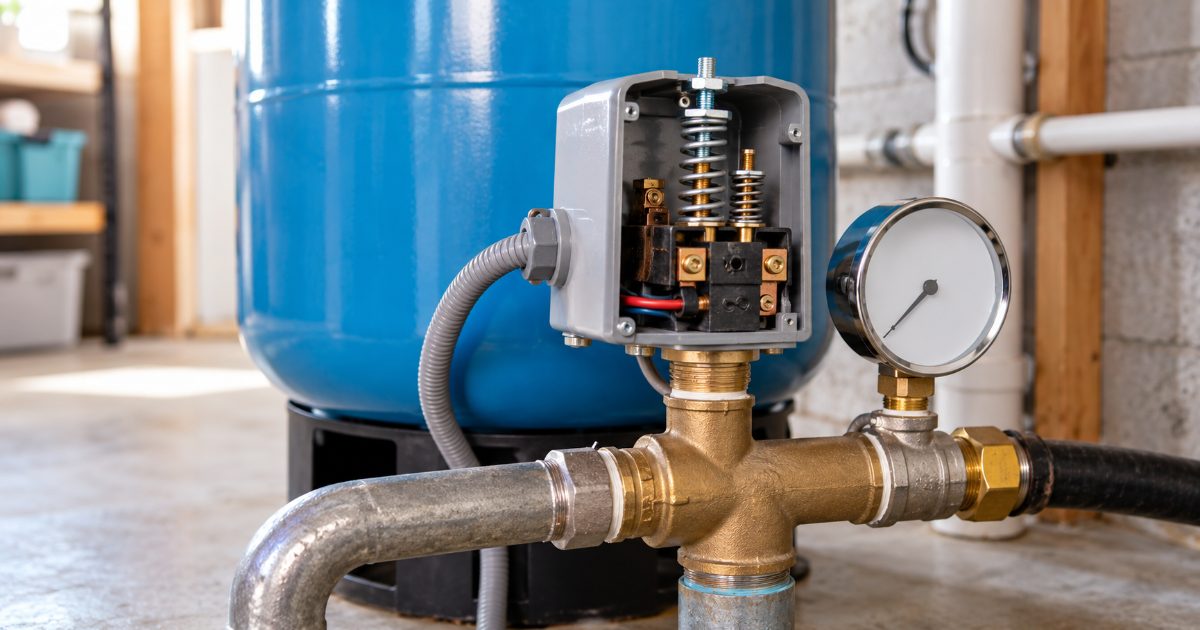
A failing well pump pressure switch is replaced by its pressure pair, not by brand. Read the setting on the old switch’s cover: 20-40, 30-50 or 40-60 psi. The Square D Pumptrol FSG2 is the standard replacement, and Schneider’s brochure prints the code for each pair: FSG2J20 is 20-40, FSG2J21 is 30-50 and FSG2J24 is 40-60, all on a 1/4 in NPSF internal connection with a 15-30 psi adjustable differential and a 20-65 psi cut-out range. The switch is rated 1.5 hp at 115 V or 2 hp at 230 V, which Schneider says covers most residential pumps. Add the M4 suffix (FSG2J21M4 or FSG2J24M4) for a low-pressure cutoff that shuts the pump off about 10 psi below cut-in and stays off until reset by hand. After fitting the new switch, set the tank air charge 2 psi below cut-in with the tank drained: 28 psi for a 30-50 switch and 38 psi for 40-60, per Sta-Rite and Amtrol.
The picks
The old switch reads 30-50 and the tank tee is 1/4 in internal thread
Square D Pumptrol 9013FSG2J21, 30-50 psi
Pumptrol brochure: cut-in 30, cut-out 50 psi; 1/4 in NPSF internal connection; 15-30 psi adjustable differential; 20-65 psi cut-out range; 1.5 hp at 115 VAC, 2 hp at 230 VAC; 220 psig maximum; UL and CSA listed
The old switch reads 40-60; CP is the clam-pack version of the same switch
Square D Pumptrol FSG2J24CP, 40-60 psi
Pumptrol brochure: cut-in 40, cut-out 60 psi; 1/4 in NPSF internal; 15-30 psi differential; 20-65 psi cut-out range; 1.5 hp at 115 VAC, 2 hp at 230 VAC; CP suffix means clam packaging, BP box packaging
A 30-50 system on a well that has run dry or lost prime before
Square D Pumptrol 9013FSG2J21M4, 30-50 psi with low-pressure cutoff
Pumptrol brochure: 30-50 psi setting; Form M4 turns the pump off when pressure falls more than 10 psi below cut-in (below about 20 psi on this switch), manual lever reset; same 1/4 in NPSF connection and hp ratings as the FSG2J21
A 40-60 system that needs the pump protected from running dry
Square D Pumptrol 9013FSG2J24M4, 40-60 psi with low-pressure cutoff
Pumptrol brochure: 40-60 psi setting; Form M4 low-pressure cutoff about 10 psi below cut-in with manual reset; 1998 catalog: FSG with Form M4 cut-out range 34-65 psig; 1/4 in NPSF internal
Reads cut-in and cut-out on the tank tee before you order anything
MEANLIN MEASURE 0-100 psi well pump gauge, 1/4 in NPT
Listing title: 0-100 psi, 2 in dial, 1/4 in NPT lower mount with 3/8 in and 1/2 in NPT hex bushings. A gauge on the tee is the only way to confirm the old pair and to set the new nuts.
Reads the tank air charge at the Schrader valve
JACO Elite tire pressure gauge, 0-60 psi
0-60 psi range covers the 18, 28 and 38 psi precharge targets for 20-40, 30-50 and 40-60 switches; used with the tank drained, per Amtrol and Sta-Rite
The switch is the cheapest part on the tank tee, which is why it gets blamed for a waterlogged tank and a plugged nipple, two faults Schneider’s troubleshooting table lists separately.
Which Square D switch replaces the one you have?
Schneider’s Pumptrol brochure breaks the part number down: 9013 is the class, FS is standard action for pumps under 1.5 hp, G is a NEMA 1 enclosure (W is NEMA 3R), 2 is the 1/4 in NPSF internal connection, and the J code is the pressure pair. Every figure below is from that brochure or Square D’s Class 9013 catalog.
| Model | Cut-in / cut-out (psi) | Cut-out range | Differential | Connection | Motor rating | Low-pressure cutoff |
|---|---|---|---|---|---|---|
| 9013FSG2J20 | 20 / 40 | 20-65 psi | 15-30 psi, adjustable | 1/4 in NPSF internal | 1.5 hp at 115 V, 2 hp at 230 V | no |
| 9013FSG2J21 | 30 / 50 | 20-65 psi | 15-30 psi, adjustable | 1/4 in NPSF internal | 1.5 hp at 115 V, 2 hp at 230 V | no |
| 9013FSG2J24 | 40 / 60 | 20-65 psi | 15-30 psi, adjustable | 1/4 in NPSF internal | 1.5 hp at 115 V, 2 hp at 230 V | no |
| 9013FSG2J21M4 | 30 / 50 | 34-65 psi (M4, 1998 catalog) | 15-30 psi, adjustable | 1/4 in NPSF internal | same as FSG2 | yes, about 10 psi below cut-in, manual reset |
| 9013FSG2J24M4 | 40 / 60 | 34-65 psi (M4, 1998 catalog) | 15-30 psi, adjustable | 1/4 in NPSF internal | same as FSG2 | yes, about 10 psi below cut-in, manual reset |
| 9013FYG2 (any J code) | as coded | 25-80 psi | 20-30 psi | 1/4 in NPSF internal | FY class, pumps under 2 hp | M4 optional, 39-80 psi range |
The brochure also lists J18 (20-50), J33 (50-70), J25 (60-80) and J99 for a custom pair. A CP or BP suffix is packaging only: clam pack or box, same switch. The FY series is for cut-outs above 65 psi or pumps up to 2 hp.
What else fits the same tank tee?
| Switch | Factory setting | Adjustable range | Differential | Connection | Motor rating | Document |
|---|---|---|---|---|---|---|
| Hubbell / Furnas 69ES1 | 30-50 psi | cut-in down to 10 psi, cut-out up to 80 psi | 15-25 psi | 1/4 in male NPT with the 2A suffix | 1.5 hp at 120 V, 2 hp at 240 V | catalog 4269ES, August 2005 |
| Hubbell / Furnas 69ES2 | 30-50 psi | cut-in down to 10 psi, cut-out up to 80 psi | 15-25 psi | 1/4 in male NPT with the 2A suffix | 2 hp at 120 V, 3 hp at 240 V | catalog 4269ES, August 2005 |
| LEFOO LF10-W (30-100 psi series) | 30-50 psi | 30-100 psi series range | 20-35 psi | 1/4 in NPT | per variant, not quoted here | lefoogroup.com product page |
The 69ES catalog is from 2005, so current production was not confirmed this session. The LEFOO page prints series-wide ranges, so the differential of the specific 30-50 switch sold on Amazon is not quoted.
The spec that trips people is the thread. The FSG2 is 1/4 in NPSF internal, the FSG9 is 1/4 in NPT external, and the 69ES2A is 1/4 in male NPT. Look at which way the old switch threads on.
How do you set cut-in and cut-out?
Schneider’s data bulletin 9013DB0701: disconnect power, remove the cover, and use a 3/8 in nut driver on the two spring nuts. FAQ FA121330 says to set cut-in first, then the differential.
| Nut | Turn clockwise | Turn counterclockwise | Effect on the other setting |
|---|---|---|---|
| Large range nut | raises cut-in | lowers cut-in | cut-out moves by the same amount; differential unchanged |
| Small differential nut | raises cut-out | lowers cut-out | cut-in unchanged |
The bulletin’s range-nut guideline: 3-1/2 turns clockwise from 20-40 to 30-50, 3-1/2 from 30-50 to 40-60, and 8 to 8-1/2 from 20-40 to 40-60. Read the result on a 0-100 psi gauge on the tank tee and trim. No maker document opened this session prints a turns-per-psi figure for the differential nut.
On an M4 switch, hold the lever at Run until pressure is within 10 psi of cut-in, then release it.
What tank precharge goes with the new setting?
Amtrol’s Well-X-Trol manual says to set the air charge 2 psig below pump cut-in, only with the tank empty of water and the system off. Sta-Rite’s S490 prints the same rule as a chart, and Schneider’s bulletin repeats it where the tank maker gives no instructions.
| Switch setting | Tank precharge | Printed in |
|---|---|---|
| 20-40 | 18 psi | Sta-Rite S490 |
| 30-50 | 28 psi | Sta-Rite S490 |
| 40-60 | 38 psig | Amtrol 9016-868 worked example |
Read it with a 0-60 psi gauge on the Schrader valve with the tank drained. A switch raised from 30-50 to 40-60 needs 10 psi more air in the tank. The well pressure tank cross-reference covers the tank side.
Check the tank before you order the switch
The FSG2J21 is the right part for a 30-50 system, and it will not fix a pump that short-cycles on a tank that has lost its air. Schneider lists a waterlogged tank and a plugged line to the switch as separate causes, and Franklin Electric’s AIM manual puts a check valve stuck open, a waterlogged tank and a leak under the same “motor starts too often” symptom. Drain the tank, read the Schrader valve, confirm the nipple passes water. Only then is the switch the part, and the FSG2J21M4 is worth the extra if the well has ever run dry.
When is the switch not the problem?
Franklin Electric lists a damaged pressure switch as one cause of a motor that will not start, alongside blown fuses, a control box fault and damaged wiring; its check is voltage at the contact points.
Schneider sells a contact kit, 9998PC241, for the 9013F series, so pitted points on a sound switch can be renewed. If the pump gives no water at all, the no-water guide walks the chain from breaker to pump before the switch is touched.
Frequently asked questions
How do I know whether my old switch is 30-50 or 40-60?
Schneider's brochure says to note the existing pressure pair before replacing the switch, because it is where the pump turns on and off. Read the model code on the old cover: a Pumptrol ending J20 is 20-40, J21 is 30-50, J24 is 40-60. If the label is gone, watch a gauge on the tank tee: the pump starts at cut-in and stops at cut-out.
Can I turn a 30-50 switch into a 40-60 switch?
Yes, within the range Square D prints. Schneider's data bulletin 9013DB0701 gives the range nut 3-1/2 turns clockwise to move a 30-50 switch to 40-60, and 8 to 8-1/2 turns to move 20-40 to 40-60. The cut-out range of the FSG2 is 20-65 psi, so 60 psi is inside it. Raise the tank air charge to 38 psi to match.
What does the M4 low-pressure cutoff on a Pumptrol do?
Schneider's brochure describes Form M4 as turning the pump off when system pressure falls more than 10 psi below cut-in, which on a 30-50 switch means below about 20 psi. The pump stays off until the lever is reset by hand. Schneider's data bulletin says to hold the lever at Run until pressure is within 10 psi of cut-in.
Which pressure switch nut changes the cut-in and which changes the cut-out?
Schneider's FAQ FA121330 and data bulletin agree: the large range nut turned clockwise raises cut-in, and cut-out rises by the same amount, so the differential does not change. The smaller differential nut turned clockwise raises cut-out only. Set cut-in first, then the differential, with power disconnected and a 3/8 in nut driver.
Does a new pressure switch fix a pump that keeps cycling on and off?
Not on its own. Schneider's troubleshooting table lists a waterlogged or uncharged tank and a plugged line to the switch as separate causes from a bad switch, and Franklin Electric's AIM manual puts a waterlogged tank and a stuck check valve under the same symptom. Check the tank air charge with a gauge before paying for a switch.
Fact sheet and how to cite this page
- Answer
- Replace a well pump pressure switch by its pressure pair. Schneider’s Pumptrol brochure codes the FSG2 as J20 for 20-40, J21 for 30-50 and J24 for 40-60 psi, on a 1/4 in NPSF connection, with a 15-30 psi adjustable differential and a 20-65 psi cut-out range, rated 1.5 hp at 115 V or 2 hp at 230 V. The M4 option cuts the pump off about 10 psi below cut-in.
- Applies to
- 9013FSG2J20
- 9013FSG2J21
- 9013FSG2J24
- 9013FSG2J21M4
- 9013FSG2J24M4
- Compatibility basis
- Square D / Schneider Electric Pumptrol brochure RP19721017 (2017) for the part-number anatomy, pressure codes, differential, cut-out range, horsepower ratings and the M4 option; Square D Class 9013 catalog (9/98) for the FSG and FYG selection tables; Schneider data bulletin 9013DB0701 (12/2007) and FAQ FA121330 for the nut procedure
- Assumptions
- The FSG2 connection is 1/4 in NPSF internal. A switch on an external 1/4 in NPT nipple is the FSG9 in Square D’s catalog, and a Hubbell/Furnas 69ES with the 2A suffix is 1/4 in male NPT. Match the thread before the pressure pair.
- The Square D Class 9013 catalog is dated 1998 and the Hubbell/Furnas 69ES catalog 2005. Their figures are quoted as printed and dated here; Schneider’s current product page could not be read this session.
- The LEFOO LF10-W page prints series-wide ranges across several variants, so no per-model differential is quoted for the Amazon-sold 30-50 LF10-W.
- Schneider’s brochure says the FSG2 is NSF certified for low lead and prints no standard number, so none is cited here.
- Method
- Specification comparison from the makers’ own catalogs, brochures and data bulletins, opened this session. No switch was bench tested. Amazon listings were checked only for the model number in the title and stock status; no price is printed on this page because the live card carries it.
- Primary source
- Square D / Schneider Electric, Pumptrol Pressure Switches brochure RP19721017 (2017) (manufacturer or vendor document)
- Facts verified
- Last updated
- Cite as
- OwnerSpec, "Well Pump Pressure Switch Replacement: Square D Pumptrol FSG2J20, FSG2J21 and FSG2J24 for 20-40, 30-50 and 40-60 psi", https://ownerspec.com/water/parts/well-pump-pressure-switch-30-50-40-60/, facts verified 3 October 2026.
Every figure above also appears, with its source, in the article. All sources · How OwnerSpec verifies numbers
Sources
- Square D / Schneider Electric, Pumptrol Pressure Switches brochure RP19721017 (2017): part-number anatomy, pressure codes J18 to J99, FSG2 1/4 in NPSF connection, 15-30 psi differential, 20-65 psi range, 1.5 hp at 115 VAC and 2 hp at 230 VAC, 220 psig maximum, Form M4 10 psi below cut-in with manual reset, stocked models FSG2J20CP, J21CP, J24CP and J21M4CP, UL and CSA listing, NSF low-lead wording without a standard number (manufacturer or vendor document)
- Square D, Commercial Pressure Switches Types F and G, Class 9013 catalog (9/98): FSG cut-out 20-65 psig, differential 15-30, cut-in 5-45; FYG cut-out 25-80 psig, differential 20-30, cut-in 5-60; FSG with Form M4 cut-out 34-65; FSG2 1/4 in NPSF internal, FSG9 1/4 in NPT external; 220 psig maximum allowable pressure (manufacturer or vendor document)
- Schneider Electric, Data Bulletin 9013DB0701, Preventive Maintenance and Troubleshooting for Class 9013F/G Pressure Switches (12/2007): range and differential nut procedure with a 3/8 in nut driver, turns table (20-40 to 30-50 3-1/2 turns; 20-40 to 40-60 8 to 8-1/2; 30-50 to 40-60 3-1/2), bladder pressure 2 psi below cut-in with the tank drained, M4 lever procedure, troubleshooting causes, contact kit 9998PC241 (retailer listing or retailer-hosted document)
- Schneider Electric, FAQ FA121330, How do you adjust the settings on a 9013FSG switch: large range nut clockwise for higher cut-in, smaller differential nut clockwise for higher cut-out, adjust cut-in first (manufacturer or vendor document)
- Amtrol, Well-X-Trol Installation and Operation Instructions 9016-868 MC10185: set the precharge 2 psig below the pressure switch pump cut-in setting, 38 psig for 40/60, adjust only with the tank empty of water and the system off (manufacturer or vendor document)
- Sta-Rite, Pro-Source Steel Pressure Tanks Owner's Manual S490: pre-charge 2 PSI below pump cut-in, 28 PSI for a 30-50 switch and 18 PSI for a 20-40 switch (manufacturer or vendor document)
- Hubbell / Furnas, Class 69ES Pressure Switch for Water Systems, catalog 4269ES (August 2005): factory setting 30-50 psi, differential range 15-25 psi, minimum cut-in 10 psi, maximum cut-out 80 psi, 69ES1 1.5 hp at 120 V and 2 hp at 240 V, 69ES2 2 hp at 120 V and 3 hp at 240 V, nut A and screw B adjustment, 1/4 in male NPT suffix 2A, UL listed (manufacturer or vendor document)
- LEFOO Group, Water Pump Pressure Switch LF10-W: 1/4 in NPT connections, 2-pole double-break contacts, 30-100 psi series range with 30-50 psi factory setting and 20-35 psi differential, 250 psi maximum (manufacturer or vendor document)
- Franklin Electric, AIM Manual M1311 (60 Hz, 2026 edition), System Troubleshooting table p. 26: motor starts too often from a check valve stuck open, a waterlogged tank, a leak, or a pressure switch with welded contacts or a wrong setting (manufacturer or vendor document)